How to Style Olive Green Interiors for a Sophisticated, Nature-Inspired Home
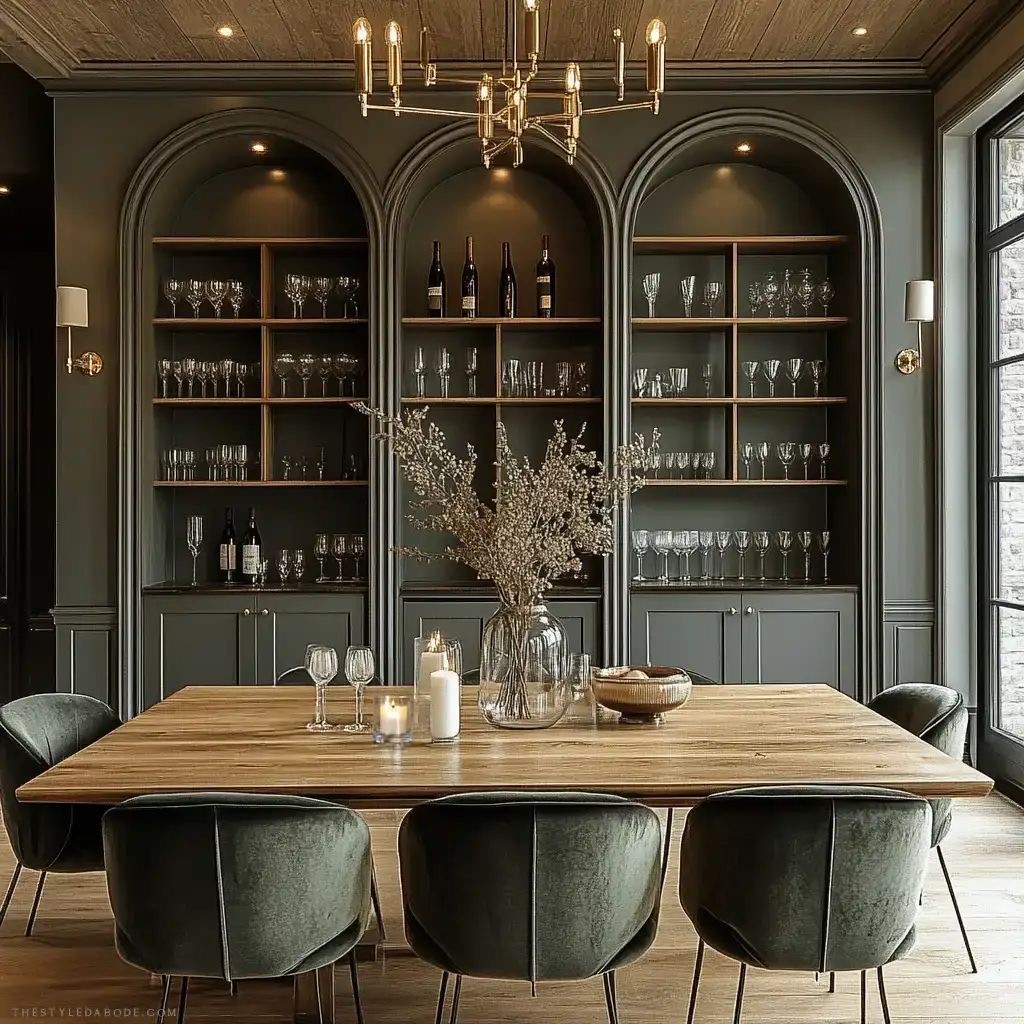
Olive and Mediterranean greens have a quiet confidence that few colors can match. Rooted in nature and shaped by centuries of architecture and craft, these tones bring an effortless sense of balance to interior spaces. They recall olive groves shimmering in the heat, stone villas softened by time, and the subtle contrast between foliage, earth, and sea. Used thoughtfully, they create interiors that feel both deeply calming and undeniably refined.
Olive green is grounded and earthy, with a softness that makes a room feel settled and intentional. It absorbs light gently, wrapping a space in warmth rather than drama. Mediterranean green, by contrast, carries a fresher, sunlit quality. It feels lifted and airy, echoing the greens found along coastal landscapes and garden courtyards. Together, these shades form a palette that is timeless rather than trendy, one that evolves with changing light and seasons instead of competing with them.
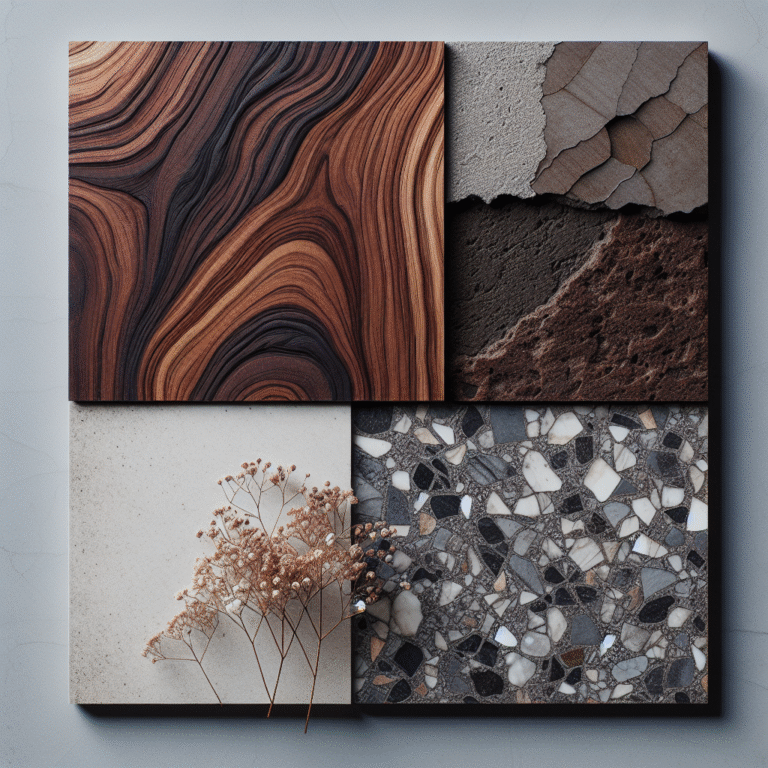
The true beauty of these greens emerges when they are paired with natural materials. Stone is one of their most natural companions. Limestone, travertine, and textured plaster surfaces enhance the organic quality of green, creating spaces that feel carved rather than decorated. The softness of mineral finishes allows the color to breathe, resulting in interiors that feel serene and tactile rather than overly styled.
Wood introduces warmth and depth, strengthening the connection to nature. Light oak and aged pine emphasize the freshness of Mediterranean green, while walnut or darker woods deepen olive tones and add a sense of quiet luxury. These combinations work seamlessly in living areas and kitchens, where green cabinetry or walls can anchor the space without overwhelming it.
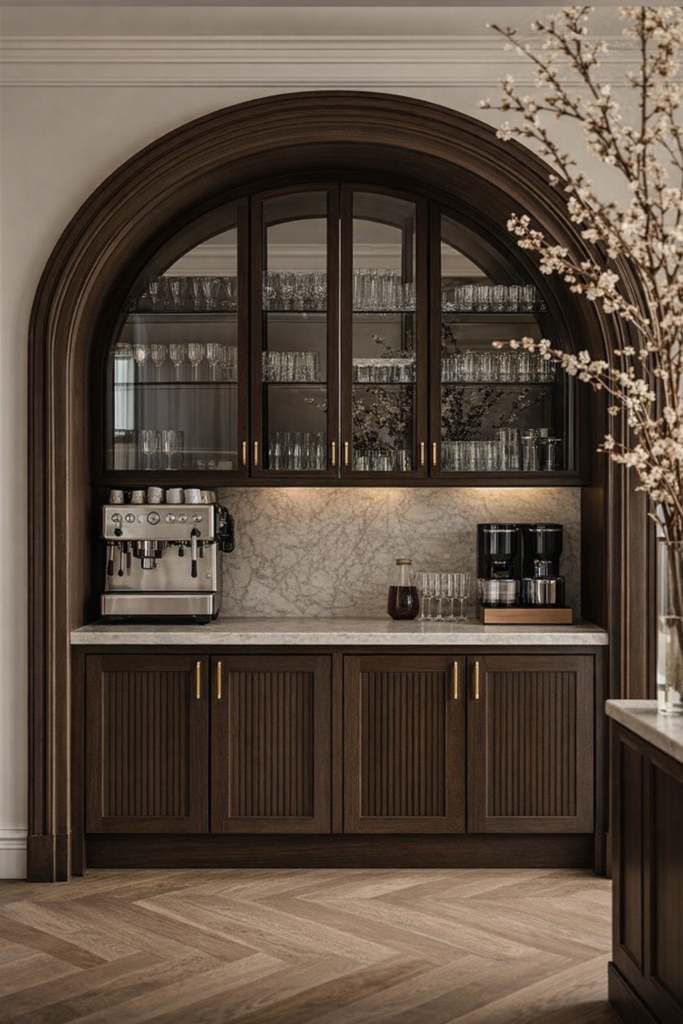
Clay, terracotta, and handmade ceramics bring a sun-baked warmth that feels unmistakably Mediterranean. Their natural imperfections contrast beautifully with green surfaces, adding character and authenticity. Whether used in flooring, decorative objects, or tiled details, these materials introduce a sense of history and craftsmanship that elevates the entire interior.
Textiles play a subtle but essential role. Linen, cotton, and wool soften the visual weight of green and enhance its calming effect. Neutral fabrics allow the color to remain the focal point while contributing texture and comfort. Layered thoughtfully, they create spaces that feel lived-in and inviting rather than overly curated.
Metal accents complete the palette with understated elegance. Aged brass, bronze, and blackened steel echo the patina of traditional Mediterranean interiors while adding a refined contrast. Used sparingly in lighting, hardware, or furniture details, they bring a quiet sophistication that complements green’s natural depth.
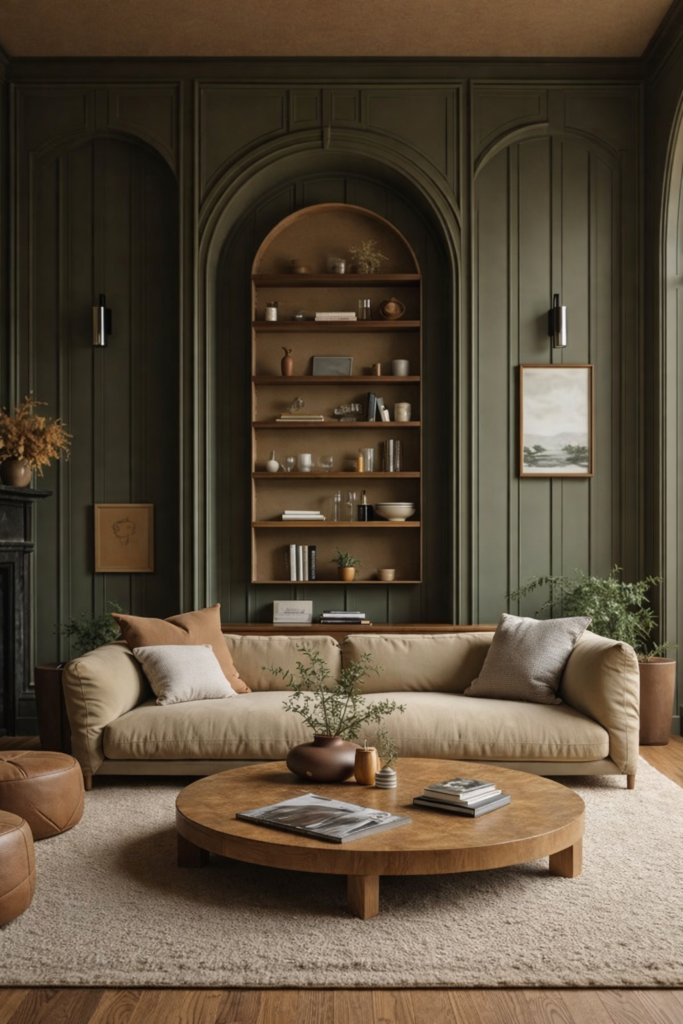
What makes olive and Mediterranean green so enduring is their ability to blur the boundary between indoors and outdoors. They carry the essence of landscape into the home, creating environments that feel grounded, breathable, and deeply human. In a world of fast-changing trends, these colors remind us that beauty often lies in restraint, natural materials, and hues that feel as though they have always belonged.